
Meme Culture: Its Origin, Influence, and the Psychology Behind It
This article explores where memes came from, what makes them so powerful, how they shape culture and the darker side of their influence.

Memes are no longer just funny pictures you scroll past on social media, they are a cultural and economic powerhouse. This year alone, the meme industry is projected to reach $6.1 billion, growing four times faster than the entire fashion industry. They shape conversations, drive trends, and even influence brands more than traditional ads ever could.
The global meme industry is now worth billions, growing faster than fashion or film marketing. A single meme can turn an unknown brand into a global name within days. Remember when Chilox wished their competitor Madchef a playful “Happy Birthday”? That one light-hearted post spread like wildfire across Bangladesh’s social media, a perfect example of how humor and timing can build brand identity and community engagement.
Contents
• The Origin of Meme Culture
• The Psychology Behind Memes
• The Influence of Memes on Marketing
• The Dark Side of Meme Culture
• Conclusion
The Origin of Meme Culture
The term “meme” was first coined by Richard Dawkins in his 1976 book The Selfish Gene. He defined it as a vital, non-invasive form of communication, an idea, behavior, or style that spreads from person to person within a culture. In short, just as genes carry biological information, memes carry cultural information.
Interestingly, the word “meme” itself is a meme. Dawkins created it as a scientific term, but over time it spread through society, adapted to new meanings, and evolved into a common word we all use today. Every year, the Oxford English Dictionary adds hundreds of new words, showing how language itself behaves like a living organism, changing, adapting, and multiplying, just like memes.
Before the internet, memes existed as folk tales, proverbs, or songs — anything people repeated and passed on. But the rise of social media in the 21st century changed everything. Platforms like Facebook, Twitter, Instagram, and TikTok made memes visual, fast, and global. They became viral images, short videos, and witty captions that speak universal emotions like humor, frustration, irony, or hope in just a few words.
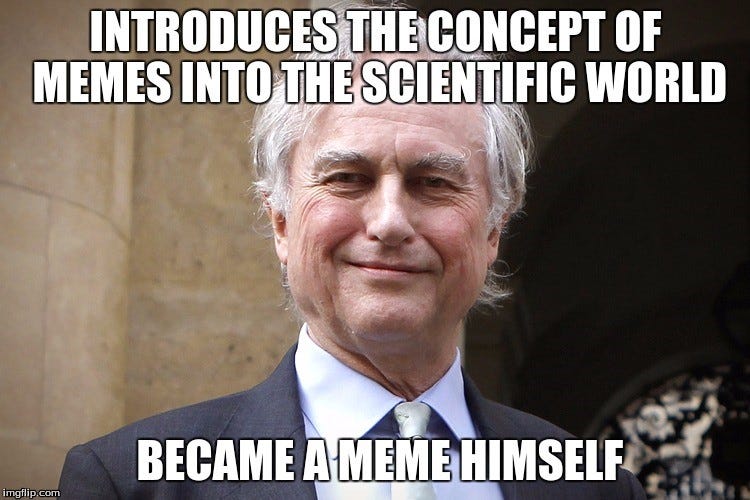
Richard Dawkins introduced the term “meme” in 1976 and decades later, he became one himself.
A great example is the slang “no cap”, meaning “no lie” or “I’m being honest.” It began in African American culture, spread online, and now even brands and influencers use it casually. That’s how meme culture works; it thrives on imitation, humor, and relatability.
Meme Culture in Marketing
Brands quickly realized memes were not just entertainment; they were powerful marketing tools. A meme connects emotionally with people in ways advertisements often can’t.
Take Puma, for instance. They uploaded a short video of Ronaldinho trying on their new football boots and juggling the ball in his iconic style. It became the first video on YouTube to reach 1 million views long before the era of TikTok virality. The clip didn’t directly advertise the shoe; it simply captured an authentic, memorable moment that people wanted to share.
Or consider the playful rivalry between KFC and Burger King. Both brands constantly tease each other on social media through memes and witty replies. It’s humor-driven marketing, not aggressive advertising, that earns them millions of impressions. This “banter marketing” works because it humanizes brands and turns audiences into active participants.
Locally, restaurants like Chilox have mastered this art. When they humorously wished Madchef a happy birthday, the meme spread across Facebook instantly. It showed that even small, relatable humor can strengthen brand personality and create a loyal community.
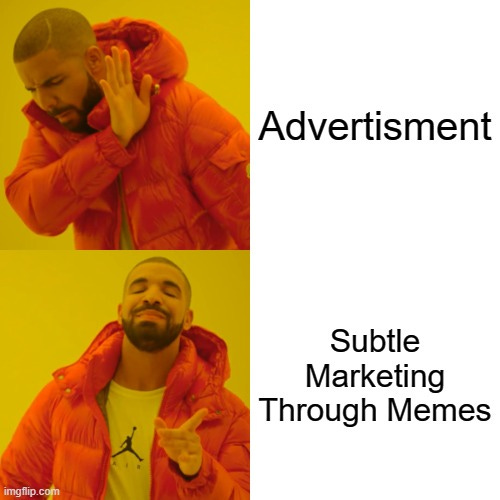
Memes are powerful because they speak the audience’s language. They’re short, emotional, and shareable. A funny post is not just entertainment; it’s marketing that feels human.
The Psychology Behind Memes
According to YPulse’s survey of 2019, about 75% of 13 to 36-year-olds take part in sharing memes, with 79% of 13 to 17-year-olds tending to do the same. The report also says that 38% of them follow meme accounts on social media, 74% send memes to make people smile or laugh—and 53% send them to react to something.
At their core, memes are not just jokes; they are emotional shortcuts. They compress shared experiences, frustrations, and beliefs into a single, simple image or phrase that the human brain instantly recognizes and connects with.
Psychologists describe this as emotional resonance. When we see a meme that reflects how we feel, a lazy Sunday mood, a frustrating exam, or that bittersweet “adulting is hard” reality, our brain rewards us with a sense of recognition and belonging. We laugh not just because it’s funny, but because it says “this is me.”
Memes also tap into a basic human need: social validation. Sharing a meme is like saying, “I get it, and I know you do too.” In a world where attention is currency, memes act as quick signals of identity and community. When you share a meme about procrastination or heartbreak, you’re not only expressing emotion, you’re joining a tribe that understands it.
Experts in behavioral psychology point out that this is why memes spread faster than reasoned opinions or essays. Our brains are wired for speed and emotion, not complexity. Memes exploit this bias by offering low-effort, high-reward communication. They’re easy to create, consume, and share, yet they give the illusion of deep expression.
Neuroscientist Susan Blackmore, who expanded on Dawkins’ meme theory, argued that memes survive because they hijack our attention systems. The ones that trigger laughter, shock, or emotion are more likely to be remembered and shared. In essence, memes evolve like living things: the funniest or most relatable ones “reproduce” through shares, while the dull ones quietly die out.
That’s also why memes can be powerful tools for marketing and manipulation alike. A single meme can build trust, spread awareness, or reinforce stereotypes depending on the emotion it evokes.
Humor, irony, relatability, and rebellion are the emotional currencies that make memes unstoppable. They satisfy both our desire to belong and our need to express, all in a format that takes less than two seconds to process.
The Dark Side of Meme Culture
However, not all memes are harmless. The same speed and simplicity that make memes powerful also make them dangerous.
In recent years, problematic memes have become more common — content that spreads racism, sexism, xenophobia, or body-shaming, often disguised as “just jokes.” The problem is that repetition normalizes the behavior. When people laugh at something again and again, they stop questioning it.
Memes can easily cross the line between humor and harm. They can desensitize audiences, turning real suffering into entertainment. For example, jokes about depression, trauma, or serious social issues often circulate under the label of “dark humor.” While some people use it as a coping mechanism, excessive exposure to such content can increase emotional numbness and reduce empathy.
Studies show that many people use memes to escape stress or sadness, and while that can be comforting at times, it also leads to passive consumption of negativity. Over time, users may start normalizing toxic humor, losing touch with how it affects others.
In short, memes mirror us — both our creativity and our insensitivity. When humor loses empathy, it becomes cruelty in disguise.
Finding Balance
It isn’t easy to control what spreads online, but we can control what we consume and share. The solution isn’t to stop laughing; it’s to laugh responsibly.
We need to reflect before we repost. Ask: does this meme spread awareness or mock someone’s pain? Does it bring people together or divide them?
The internet isn’t inherently toxic; it’s shaped by how we use it. Memes can be tools for awareness, education, and positivity if we handle them with care. From sharing mental health awareness posts to humorous takes on everyday struggles, memes can heal as much as they can hurt.
Humor is essential to life, but the fine line between humor and harm should never be blurred. The real power of meme culture lies in its ability to unite people, not to desensitize them.
Conclusion
From Dawkins’ theory in The Selfish Gene to viral Instagram posts, memes have evolved from scientific concept to cultural heartbeat. They shape conversations, drive marketing revolutions, and define how people connect in the digital era.
But with great virality comes great responsibility. Every meme we share reflects a choice — to uplift or to mock, to unite or to divide. Memes will continue to define the way we communicate, but it’s up to us to decide what kind of culture we want them to create.
If you found this article interesting, give it a like!